How Do Solar Panels Work? A Simple Explanation
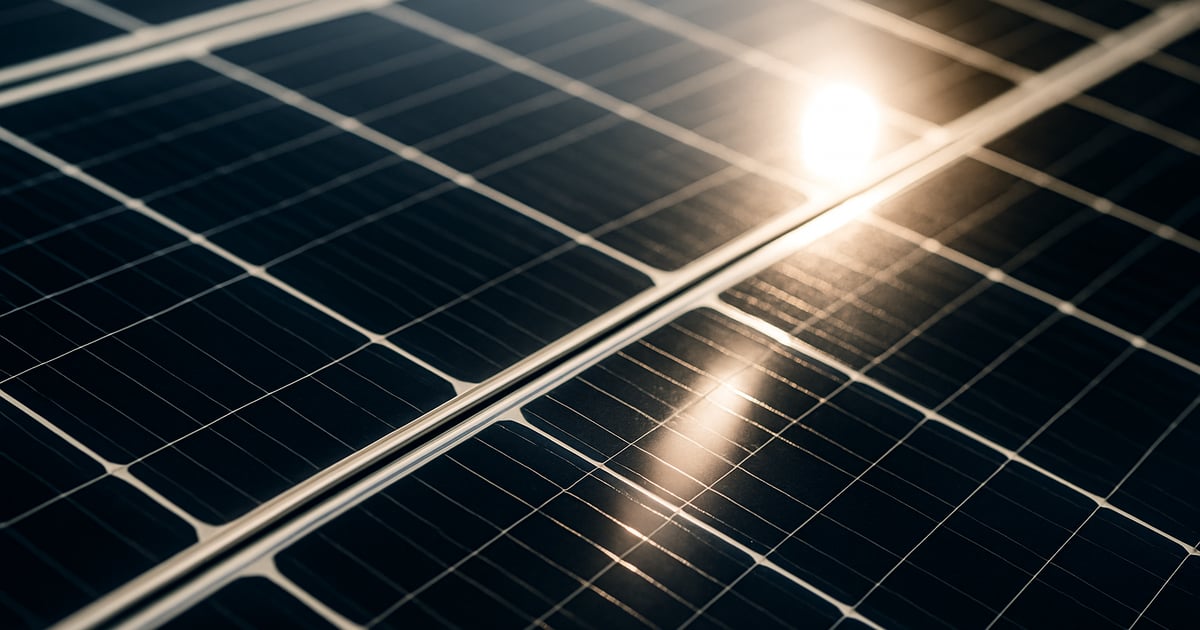
Solar panels seem almost magical, but the underlying process is well-understood physics working through a fairly simple chain of equipment. Here’s how it fits together.
The basic process, step by step
- Sunlight hits the solar panel, which is made up of many individual solar cells, most commonly made from silicon.
- The photovoltaic effect converts light into direct current (DC) electricity. When photons from sunlight strike the silicon cells, they knock electrons loose, creating a flow of electricity. This is the same basic physical principle across all standard rooftop solar panels.
- The inverter converts DC electricity into alternating current (AC). Your home’s appliances and the electric grid run on AC power, not the DC power panels produce directly, so this conversion is essential. See our comparison of string inverters vs microinverters for how this step is typically handled.
- AC electricity powers your home through your existing electrical panel, just like grid electricity does.
- Excess electricity goes to the grid or a battery. If your panels produce more than your home is using at that moment, the surplus either flows back to the utility grid (governed by your net metering policy) or charges a battery if you have one installed.
- A production meter (and often your utility meter) tracks how much electricity your system generates, which is how billing credits and, in some states, SREC income get calculated.
Why silicon solar cells work
Silicon is a semiconductor — a material that conducts electricity better than an insulator but not as freely as a pure conductor like copper. Solar cells use two layers of specially treated silicon that create an electric field when light energy knocks electrons loose, pushing them in a consistent direction to create usable current. This basic mechanism has been understood and refined for decades, which is part of why solar panel technology is considered mature and reliable rather than experimental.
What determines how much electricity a panel produces
- Sunlight intensity and duration — more direct sun, and more hours of it, means more production. This is why peak sun hours vary so much by state.
- Panel angle and orientation — panels facing more directly toward the sun’s path produce more than poorly angled ones.
- Temperature — somewhat counterintuitively, panels actually lose a small amount of efficiency in very high heat, though they still produce plenty of power in hot climates overall.
- Shading — even partial shading on part of a panel can disproportionately reduce its output, which is why shading assessment matters during installation planning.
- Panel type and quality — see our comparison of monocrystalline, polycrystalline, and thin-film panels.
Grid-tied vs. off-grid: how the pieces connect differently
Most residential systems are grid-tied, meaning they stay connected to the utility grid to draw power at night or during low-production periods, and to export excess production during high-production periods. Off-grid systems, which rely entirely on batteries with no utility connection, work differently and are covered in our grid-tied vs off-grid guide.
Why this basic understanding helps you as a buyer
Knowing the actual chain — panels to inverter to home to grid/battery — helps you understand why certain add-ons (microinverters, batteries, monitoring systems) exist and what problem each one solves, rather than treating them as arbitrary upsells. It also helps you follow along when an installer explains your specific system design during a quote.
Frequently Asked Questions
- Do solar panels work on cloudy days?
- Yes, though at reduced output. Panels still generate electricity from diffused sunlight on cloudy days, typically producing somewhere in the range of 10-25% of their clear-sky output depending on cloud density, rather than dropping to zero.
- Do solar panels work at night?
- No, panels require sunlight to generate electricity, so production stops at night. This is why homes stay connected to the grid (for nighttime power) or add battery storage to store daytime production for use after dark.
- What happens to solar electricity my house doesn't use right away?
- In a grid-tied system without a battery, excess electricity flows back to the utility grid, and depending on your net metering policy, you receive credit for it. With a battery, excess power can be stored on-site for later use instead of or in addition to being exported.