Solar Panel Costs and Savings in New York (2026 Guide)
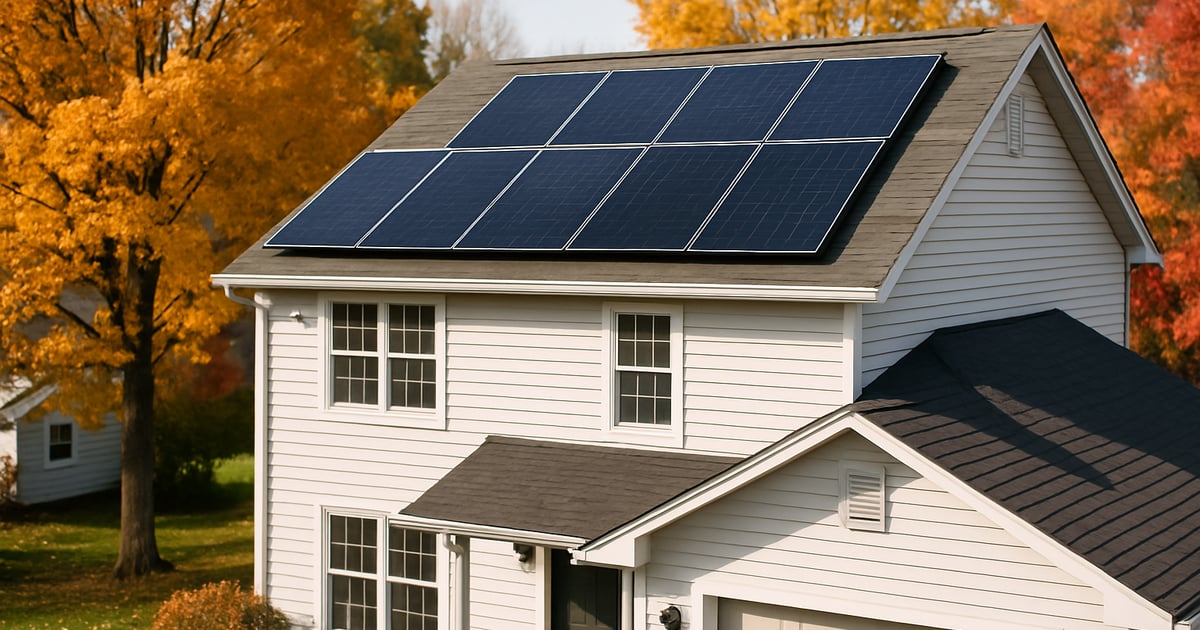
New York now has the strongest solar incentive stack in our 15 state guides: with the federal credit gone everywhere, its 25% state credit, NY-Sun rebates, and near-30¢ electricity move it to the front of the pack.
New York solar at a glance (July 2026)
| Metric | Figure |
|---|---|
| Avg. residential electricity rate | 29.45¢/kWh (EIA, April 2026) — second only to California in our guides |
| Avg. peak sun hours | ~4.0 per day (NREL-based estimate) |
| Typical installed cost | ~$2.40–$3.35 per watt before incentives (2026 national range) |
| Export compensation | Phase One net metering (full retail credit) + monthly CBC charge; VDER transition underway |
| Federal tax credit | None for purchases after Dec 31, 2025 (details) |
| State incentives | 25% tax credit up to $5,000 + NY-Sun rebate ~$0.20–$0.40/W + sales & property tax exemptions |
The 25% state credit: now the biggest solar tax credit in the country
New York’s state income tax credit pays 25% of your system cost up to $5,000, with unused credit carrying forward up to five years. Post-2025, no other state in our guides comes close — Arizona caps at $1,000, Massachusetts at $1,000. On a $20,000 system this credit alone returns $5,000, replacing a meaningful share of what the expired federal credit used to provide. Confirm details with the NYS Department of Taxation and Finance when filing.
NY-Sun: an upfront discount, not a tax filing
NY-Sun, administered by NYSERDA, pays installers an upfront incentive that comes off your contract price — recently around $0.20–$0.40 per watt for residential systems depending on utility territory, or roughly $1,200–$2,400 on a 6 kW system. Incentives decline in steps as each region’s capacity blocks fill, so the rate your installer quotes reflects current availability — ask them to show the NY-Sun line item explicitly in the contract.
New York also exempts solar from state sales tax and offers a property tax exemption (localities can opt out — check yours).
Net metering, the CBC, and the VDER transition
New residential solar customers can currently elect Phase One net metering — full retail credit for exported electricity — while paying a monthly Customer Benefits Charge (CBC) scaled to system size (typically a few dollars per kW per month). Over time, New York is transitioning to the VDER “value stack”, which prices exports on components like energy value and grid location, and is generally less generous for typical rooftop systems. Existing customers keep their structure; the transition is a reason to act under current rules rather than wait. Concepts covered in our net metering guide.
29¢ electricity does the heavy lifting
New York’s ~4.0 sun hours are among the lowest in our guides — and it barely matters, because at 29.45¢/kWh each kWh produced is worth roughly double what it would be in Georgia or Nevada. High rates, not high production, are what drive Northeast payback. Check your own bill against the calculator, and see the winter guide for how snow figures in.
Bottom line
Stack it up: a 25% state credit to $5,000, an NY-Sun discount up front, full retail net metering (for now), and 29¢ electricity. New York is the strongest overall solar case in our guides in 2026 — and since both NY-Sun blocks and the net metering structure get less generous over time, the stack is at its best for people who move before the next step-down.
Sources
Frequently Asked Questions
- How much is New York's state solar tax credit?
- 25% of your system cost, up to a $5,000 maximum, claimed against New York State income tax. If the credit exceeds what you owe in one year, the unused portion carries forward up to five years. With the federal residential credit ended December 31, 2025, this is now the largest solar tax credit available anywhere in our 15 state guides.
- What is NY-Sun and how much does it pay?
- NY-Sun is NYSERDA's upfront rebate program for solar installations. Residential incentives have recently run about $0.20–$0.40 per watt depending on utility territory — roughly $1,200–$2,400 on a 6 kW system — paid through your installer and deducted from your contract price. Amounts step down as capacity blocks fill in each region, so current availability matters.
- Does New York still have net metering?
- Yes, for now. New residential customers can take Phase One net metering — full retail credit for exports — while paying a monthly Customer Benefits Charge (CBC) based on system size. New York is gradually transitioning toward the less generous VDER value-stack structure, which is an argument for locking in current terms rather than waiting.