Is My Roof Right for Solar Panels?
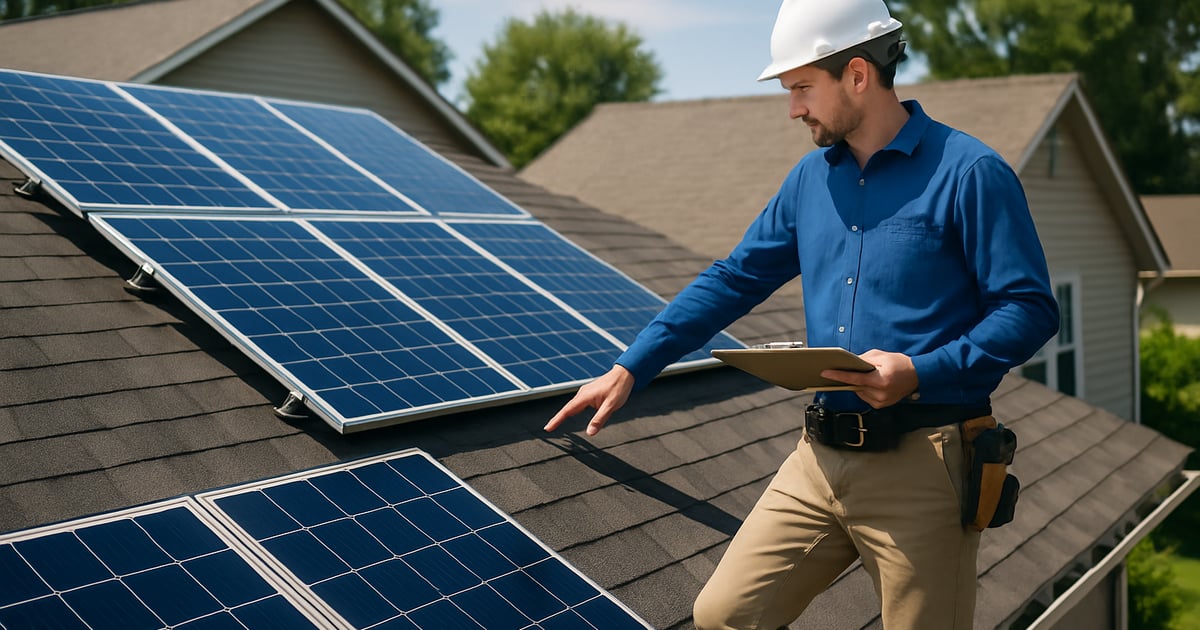
Not every roof is an equally good candidate for solar — and understanding the key factors helps you have a more informed conversation during your site assessment.
Orientation
South-facing roof sections generally receive the most consistent sun exposure throughout the day in the Northern Hemisphere, making them the most efficient orientation for panel placement. East and west-facing sections can still work well, typically producing somewhat less than a comparable south-facing area, but often still make solar worthwhile. North-facing sections are the least favorable, though a roof with other usable orientations can often still support a good system by using those sections instead.
Shading
Shading from trees, chimneys, neighboring buildings, or roof features can meaningfully reduce production — and the impact isn’t always obvious from a quick look, since shading patterns change throughout the day and across seasons. A proper site assessment typically includes shading analysis using specialized tools, not just a visual estimate. See our comparison of string inverters vs microinverters for how equipment choice can help mitigate partial shading.
Roof age and condition
Solar panels are typically warrantied for 25+ years, and removing panels to repair or replace a roof underneath them adds real cost and hassle later. Most installers will assess your roof’s remaining lifespan and may recommend replacing an aging roof before installing solar, rather than installing now and re-roofing around panels in a few years.
Roof material
- Asphalt shingle: The most common residential roofing material in the U.S., and generally straightforward for standard solar mounting hardware.
- Metal roofing: Often very solar-friendly, sometimes even allowing certain mounting systems that clamp onto standing seams without roof penetrations.
- Tile roofing: Can support solar, but often requires specialized mounts and more careful (and sometimes more expensive) installation work to avoid damaging tiles.
- Flat roofs: Require a different mounting approach (tilted racking) and are more common in commercial settings, though residential flat roof installations exist.
Structural considerations
Your roof needs to be structurally sound enough to support the added weight of panels and racking — typically not a major concern for most homes built to standard code, but older or unusual structures may need a structural assessment as part of the permitting process. See our guide on the installation process for where this fits into the overall timeline.
Roof size and usable area
Available roof area, after accounting for shading, orientation, and any obstructions (vents, chimneys, skylights), determines the maximum system size your roof can physically support. If your usage calls for more panels than your roof can hold, see our sizing guide for how to think about partial offset instead.
What a professional site assessment actually checks
- Roof orientation and pitch across all usable sections
- Shading analysis at different times of day and across seasons
- Roof material, age, and condition
- Structural capacity for the proposed system weight
- Available usable area after accounting for obstructions and required setbacks (fire code often requires clear pathways around panel arrays)
When your roof isn’t a great fit — what your options are
- Ground-mount systems, if you have suitable open land on your property
- Community solar, where you subscribe to a share of a larger, offsite solar installation instead of installing on your own roof — see our community solar comparison
- Partial offset, sizing a smaller system to fit your roof’s usable area even if it doesn’t cover 100% of your usage
Bottom line
A visual guess from the ground isn’t a substitute for a professional assessment — orientation, shading, roof condition, and structural factors interact in ways that are genuinely hard to evaluate accurately without the right tools. If you’re unsure whether your roof is a good candidate, that uncertainty itself is a good reason to get a proper site assessment rather than assuming either way.
Frequently Asked Questions
- Can solar panels go on any type of roof material?
- Most common roofing materials — asphalt shingle, metal, and tile — can support solar installations, though tile roofs often require specialized mounting hardware and sometimes cost more to install on. Roofs in poor condition or nearing the end of their life are usually not good candidates until replaced, regardless of material.
- Does my roof need to face directly south for solar to work?
- South-facing is generally optimal in the Northern Hemisphere, but east and west-facing roofs can still produce meaningful solar output, typically somewhat less than true south. A north-facing roof with no other usable orientation is the most challenging scenario and may not be a good candidate.
- What if my roof needs to be replaced in a few years?
- Many installers recommend replacing an aging roof before installing solar, since removing and reinstalling panels for a later re-roof adds significant cost and hassle. If your roof has, say, 5+ years of life left, most installers consider it a reasonable candidate; ask directly for their assessment of your specific roof's remaining lifespan.