Grid-Tied vs Off-Grid Solar Systems: What's the Difference?
Most home solar conversations assume a grid-tied system without saying so explicitly — but understanding the alternative helps clarify why that’s usually the right default.
Grid-tied systems
The large majority of residential solar installations are grid-tied, meaning the system remains connected to the utility grid alongside your solar panels.
- How it works: Your panels supply power to your home during production hours; any excess exports to the grid (subject to your net metering policy); at night or during low production, you draw power from the grid as usual.
- Cost: Generally lower than off-grid, since you don’t need enough battery capacity to cover extended periods without sun — the grid effectively serves as your backup.
- Reliability consideration: Standard grid-tied systems without battery backup typically shut off during a grid outage for safety reasons (to protect utility workers), meaning you lose power along with your neighbors unless you’ve added battery backup specifically designed to island from the grid during an outage.
- Best for: The vast majority of homeowners, since it delivers the cost and environmental benefits of solar without the complexity and expense of full energy independence.
Off-grid systems
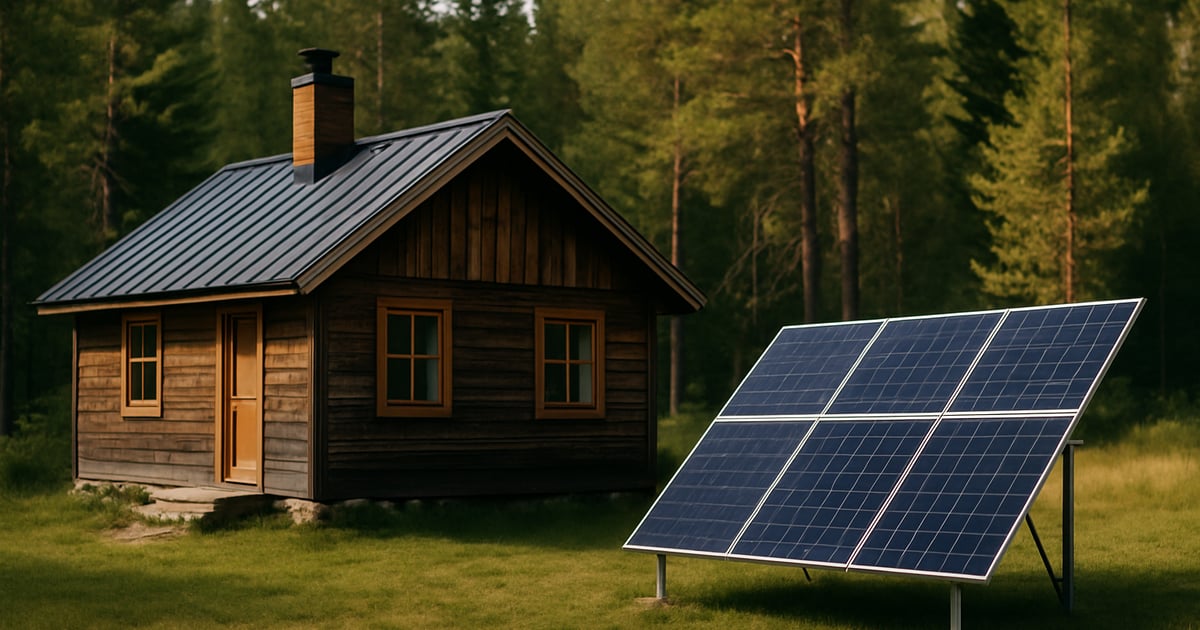
A true off-grid system has no connection to the utility grid at all, relying entirely on solar panels, battery storage, and often a backup generator.
- How it works: Panels charge batteries during the day; your home draws entirely from the battery bank, with a generator as backup during extended low-production periods.
- Cost: Generally significantly higher than grid-tied, since the battery bank must be sized for worst-case scenarios (several cloudy days in a row), not just daily cycling.
- Complexity: Requires more careful system design and usage discipline, since there’s no grid to fall back on if you use more than your system can supply.
- Best for: Rural properties without practical grid access, or homeowners specifically prioritizing total energy independence over cost efficiency.
The hybrid option: grid-tied with battery backup
A growing middle-ground option is a grid-tied system with a battery designed to provide backup power during outages — sometimes marketed as “battery backup” or using an automatic transfer switch to island part of your home from the grid when it goes down.
- Cost: Higher than grid-tied without a battery, but typically much lower than full off-grid, since the battery only needs to cover your actual usage during typical outage durations, not indefinite independence.
- Best for: Homeowners who want outage protection without the cost and complexity of full off-grid independence — see our battery storage guide for more on this decision.
Why grid-tied is the default recommendation for most homes
Unless you’re specifically off the grid already (a rural property without utility access) or have a strong specific reason to pursue full independence, grid-tied solar — with or without battery backup — almost always delivers better financial value, since you’re not paying to oversize a battery system for scenarios (extended multi-day outages) that a hybrid backup system or the grid itself already covers more cost-effectively.
Bottom line
If you’re comparing quotes and one includes a much larger battery system than expected, ask directly whether it’s designed for full off-grid independence or backup power — these are very different designs with very different costs, and most homeowners are better served by a grid-tied system, with battery backup added only if it fits a specific need.
Frequently Asked Questions
- Is off-grid solar cheaper than grid-tied because you don't pay a utility bill?
- No, typically the opposite. Off-grid systems generally cost significantly more upfront than grid-tied systems of similar panel capacity, because they require enough battery storage to cover multiple days without sun, plus often a backup generator — expenses a grid-tied system avoids by using the grid as backup.
- Can I add battery backup to a grid-tied system without going fully off-grid?
- Yes — this is actually the most common way homeowners add battery storage today. A grid-tied system with battery backup keeps your utility connection for reliability while adding a battery for outage protection or self-use optimization, without the much larger battery capacity required for true off-grid independence.
- Why do most homeowners choose grid-tied instead of off-grid?
- Grid-tied systems are typically less expensive, simpler to design and permit, and let you rely on the grid as a backup during low-production periods (like extended cloudy weather) without needing to oversize your battery capacity for worst-case scenarios.