Solar Panel Costs and Savings in Colorado (2026 Guide)
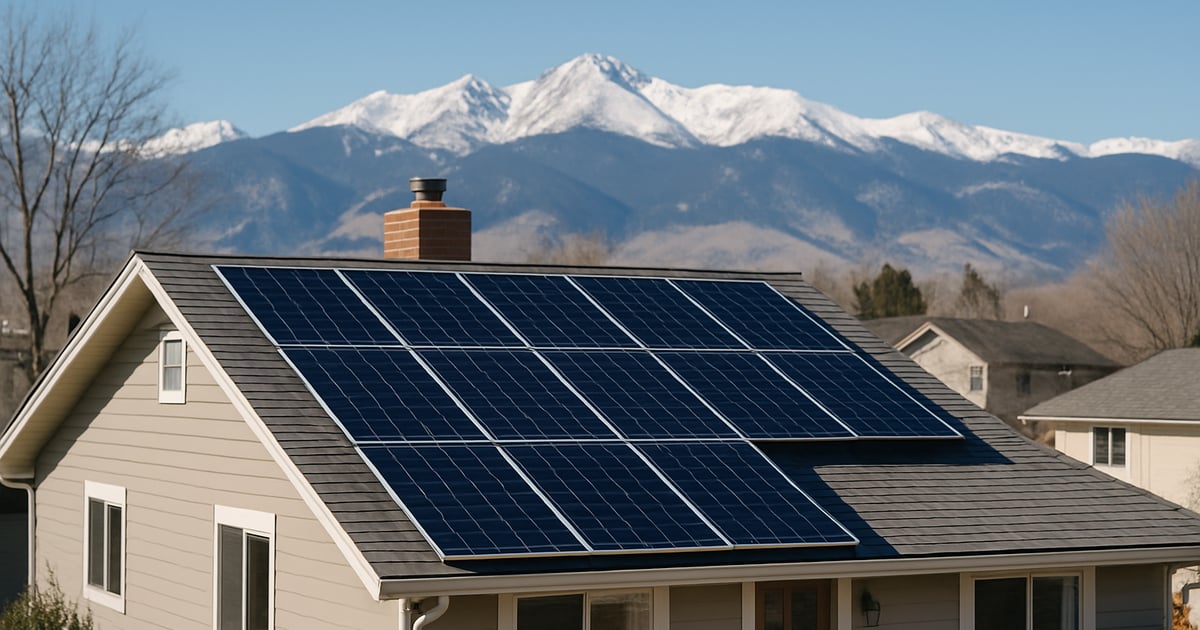
Colorado quietly has one of the healthiest solar policy environments in the country in 2026: true full-retail net metering survived here while California, Arizona, and Illinois all moved to less favorable structures.
Colorado solar at a glance (July 2026)
| Metric | Figure |
|---|---|
| Avg. residential electricity rate | 16.54¢/kWh (EIA, April 2026) |
| Avg. peak sun hours | ~5.6 per day (NREL-based estimate) |
| Typical installed cost | ~$2.40–$3.35 per watt before incentives (2026 national range) |
| Export compensation | Full retail net metering at investor-owned utilities; Xcel allows sizing up to 200% of annual usage |
| Federal tax credit | None for purchases after Dec 31, 2025 (details) |
| State incentives | Sales tax exemption (~2.9%) + property tax exemption, both automatic |
Full retail net metering — increasingly rare, still here
Colorado requires its investor-owned utilities to credit exported solar at the full retail rate: every kWh you send to the grid offsets a kWh you’d otherwise buy at 16.54¢. In an era when neighboring states pay 3–8¢ for exports, this one-to-one credit is Colorado’s single most valuable solar policy — it means you don’t need a battery to capture your system’s full value, and modest oversizing isn’t punished.
Xcel Energy, which serves most of the state’s population, allows net-metered systems up to 200% of your annual usage — useful headroom if you’re planning for an EV or a heat pump. Xcel has also run Solar*Rewards rebate programs, with the richest terms aimed at income-qualified customers; check current availability directly with Xcel. See our net metering guide for the mechanics.
Two automatic tax exemptions
Colorado doesn’t offer a state income tax credit, but it removes two costs without any paperwork:
- Sales tax exemption (~2.9% state rate) on solar equipment and installation
- Property tax exemption — your county assessor excludes the system’s added value from your home’s assessment automatically
With the federal residential credit gone since January 2026, these exemptions plus full retail net metering are the incentive stack.
One of the country’s best community solar markets
Colorado pioneered community solar gardens, and the market here is mature: renters and owners of shaded or awkward roofs can subscribe to a share of an off-site array and receive bill credits. If rooftop solar doesn’t fit your situation, read our community solar vs rooftop comparison before writing solar off.
Mountain climate: snow is manageable, sun is strong
At ~5.6 peak sun hours Colorado out-produces every Northeast and Midwest state in our guides, and its dry, sunny winters offset the snow factor better than most people expect — panels shed snow quickly in strong sun, and cold temperatures actually improve panel efficiency. Details in our winter and snow guide; run your numbers with the calculator.
Bottom line
Colorado’s combination — strong sun, one-to-one net metering with generous sizing, automatic tax exemptions, and a real community solar alternative — makes it arguably the best-balanced solar state in our guides for 2026, even without any tax credits. If you’re deciding between waiting and acting, note that full retail net metering is exactly the kind of policy other states have been rolling back; the terms you lock in now matter.
Sources
Frequently Asked Questions
- Does Colorado still have full retail net metering in 2026?
- Yes. Colorado's investor-owned utilities are required to offer net metering with a full retail-rate credit for every exported kWh — the same rate you pay for grid power. Xcel Energy, the state's largest utility, allows net-metered systems sized up to 200% of your annual electricity usage, one of the more generous sizing allowances in the country.
- Does Colorado have a state solar tax credit?
- No state income tax credit, but Colorado exempts solar equipment from state sales tax (about 2.9%) and excludes the added home value from property tax assessment — both applied automatically. With the federal residential credit ended December 31, 2025, full retail net metering is Colorado's most valuable remaining policy.
- Is community solar a good option in Colorado?
- Colorado has one of the most established community solar garden markets in the country. If you rent, or your roof is shaded or poorly oriented, subscribing to a shared solar garden gets you bill credits without installing anything — a genuine alternative worth comparing against rooftop ownership.