How Long Do Solar Panels Actually Last?
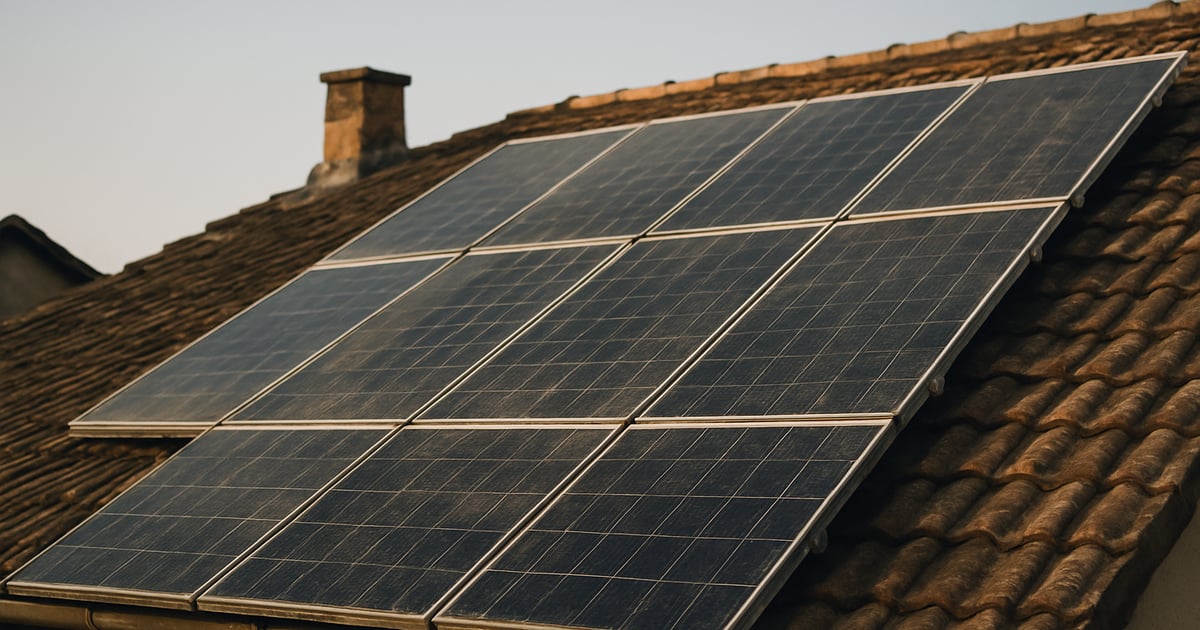
“How long do solar panels last” has a more nuanced answer than a single number — panels don’t simply stop working at a certain age, they gradually produce a bit less over time.
The warranty period vs. actual lifespan
Most manufacturers offer a performance warranty commonly around 25 years, guaranteeing the panel will still produce at least a specified percentage of its original rated output by that point — often cited in the 80-90% range. This is not an expiration date; it’s a guaranteed minimum performance level. Many panels continue producing useful electricity well beyond this warranty period, simply at a somewhat further reduced output.
Understanding degradation
Solar panels experience gradual, predictable performance decline over time due to normal wear from sun exposure, temperature cycling, and material aging — commonly cited around 0.3% to 0.5% per year for quality panels, though this varies by manufacturer and panel technology. This means a panel producing 400 watts when new might still produce somewhere around 340-360 watts after 25 years, depending on its specific degradation rate — a meaningful reduction, but far from “not working.”
What actually causes a system to be replaced or upgraded before this natural decline
- Physical damage from severe weather, falling debris, or accidents
- Inverter failure, since inverters typically have shorter lifespans than panels themselves (see below)
- Wanting more capacity, such as adding panels to support a new EV or expanded usage
- Roof replacement needs, requiring panels to be removed and reinstalled (or replaced, if old enough)
Inverter lifespan: the piece that usually needs replacement first
Unlike panels, inverters typically have shorter expected lifespans:
- String inverters: Commonly cited in the 10-15 year range before replacement is typically needed.
- Microinverters: Often warrantied for longer periods, sometimes comparable to panel warranties, though this varies by manufacturer — see our string inverters vs microinverters comparison.
Budgeting for at least one inverter replacement over a system’s full useful life is a reasonable expectation for most homeowners, and worth asking your installer about directly.
What warranties actually cover (and don’t)
Solar panels commonly carry two separate warranties — a performance warranty (covering output degradation) and a product/equipment warranty (covering manufacturing defects), which are often shorter than the performance warranty. See our full solar warranties guide for how these work and what to check before buying.
How this affects your financial calculations
Since panels retain the large majority of their output for decades, the payback period calculation most homeowners use — comparing system cost to annual savings — remains valid for many years beyond the simple payback point, with only a gradual, modest reduction in savings as output slowly declines. This is part of why solar is often framed as a long-term investment rather than a short-term cost-cutting measure.
How to keep panels performing well for as long as possible
- Keep panels reasonably clean — see our maintenance and cleaning guide
- Monitor production data regularly to catch any unusual drop that might indicate a problem rather than normal gradual degradation
- Address any physical damage or shading changes (like a growing tree) promptly
Bottom line
Solar panels are built for a genuinely long service life, with gradual, predictable output decline rather than a hard failure point. The more practical maintenance consideration for most homeowners is planning for an eventual inverter replacement, not worrying about the panels themselves failing on any predictable schedule.
Frequently Asked Questions
- Do solar panels stop working completely after 25 years?
- No. The commonly cited 25-year figure refers to the typical manufacturer performance warranty period, not a hard expiration date. Panels generally continue producing electricity well beyond their warranty period, just at a somewhat reduced output level due to gradual degradation.
- How much does solar panel output decline each year?
- As a general reference figure, many panels are warrantied to retain roughly 80-90% of their original output after 25 years, implying an average annual degradation rate commonly cited around 0.3-0.5% per year, though this varies by manufacturer and panel quality.
- Does the inverter last as long as the panels?
- Not usually. Inverters typically have shorter expected lifespans than panels — commonly cited in the 10-15 year range for string inverters — meaning many homeowners replace the inverter at least once during the system's overall useful life, an important cost to factor into long-term ownership.