Is Solar Worth It? How to Calculate Your Real ROI
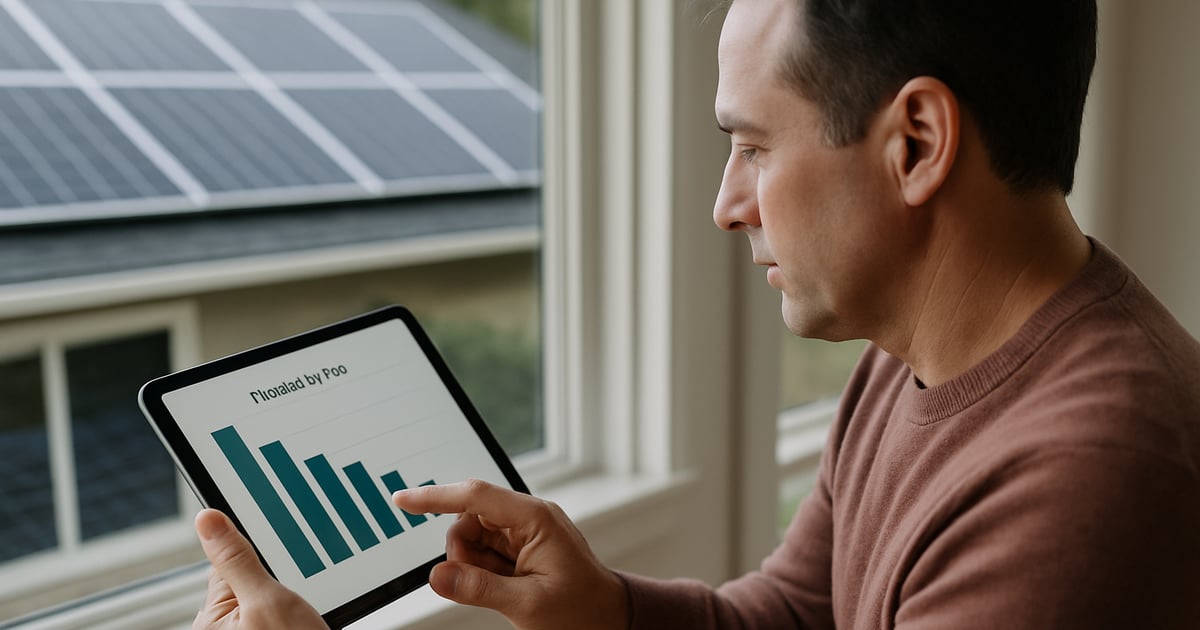
“Is solar worth it” doesn’t have one universal answer — it depends on your electricity rate, how much sun your roof gets, how you finance it, and how long you’ll stay in the home. Here’s how to work through the real math.
The core question: payback period vs. system lifespan
Most solar panels carry warranties of 25 years or more, with expected useful life often extending beyond that. If your system pays for itself in, say, 8 years, that leaves 17+ years of substantially reduced electricity costs — that’s the basic case for solar as an investment.
Step 1: Know your real system cost
Start with a realistic estimate of your system cost after any incentives you qualify for — as of 2026 that means state-specific incentives only, since the federal residential credit ended December 31, 2025. See our cost breakdown by system size for reference figures.
Step 2: Know your real annual savings
Your annual savings depend on:
- Your electricity rate — higher rates mean bigger savings per kWh offset.
- How much of your usage the system offsets — a system sized to cover 100% of your usage saves more than one sized smaller, but also costs more upfront.
- Your state’s net metering policy — this determines how much credit you get for excess power sent back to the grid. See our net metering explainer.
Step 3: Calculate payback period
The simple version: payback period = (system cost after incentives) ÷ (annual savings).
Our solar calculator does this calculation automatically using your monthly bill and state’s average electricity rate and sun hours, giving you a rough payback estimate in seconds.
Step 4: Consider what happens after payback
Once the system pays for itself, the remaining years of its warrantied life represent savings with no further cost (aside from occasional maintenance). A system with an 8-year payback and a 25-year warranty delivers roughly 17 years of largely “free” electricity, which is the real return on the investment — not just avoiding a monthly bill.
Factors that make solar a stronger financial case
- High electricity rates. States like California, New York, and Massachusetts have some of the highest residential rates in the country, which shortens payback significantly.
- Good sun exposure. Southern and southwestern states generally get more peak sun hours, producing more energy per panel.
- Favorable net metering. States with full retail-rate net metering give you more value for excess production than states with reduced compensation rates.
- Staying in your home long-term. The longer you stay past your payback period, the more total value you capture.
Factors that weaken the case
- Low electricity rates. If your utility rate is already low, the savings per kWh are smaller and payback takes longer.
- Heavy roof shading that reduces production.
- Leasing or a PPA instead of owning, which forfeits the tax credit and reduces total savings, as covered in our financing comparison.
- Planning to move soon, especially with a leased system that complicates the sale.
A reasonable way to decide
- Run your numbers through our calculator using your real monthly bill and state.
- Get two or three written quotes from local installers to confirm real system cost for your roof.
- Compare the payback period to how long you realistically plan to stay in the home.
- Factor in whether you value predictability (locking in a known cost) versus your utility’s future rate increases, which are difficult to predict but historically have generally trended upward.
Solar isn’t automatically worth it for everyone, and it isn’t automatically a bad deal either — running your own numbers, rather than relying on national headlines, is the only way to know where you land.
Frequently Asked Questions
- What is a good payback period for solar panels?
- As a general reference, many homeowners consider a payback period of roughly 6 to 10 years reasonable, given that panels are typically warrantied for 25 years or more, leaving many years of essentially free electricity after payback. What counts as "good" depends on your alternative uses for that capital and how long you plan to stay in the home.
- Does solar increase home value?
- Owned solar systems are commonly associated with increased home resale value in many markets, though the exact effect varies by location and how buyers in your market perceive solar. Leased or PPA systems generally do not add the same value, and can complicate a sale, as covered in our financing comparison.
- How do I know if my roof gets enough sun to make solar worth it?
- A licensed installer can assess your specific roof, but general red flags include heavy shading for most of the day, a north-facing roof with no other usable orientation, or a roof needing replacement soon. A site assessment is the only way to know for sure.