Solar Panels in Winter and Snow: What to Know
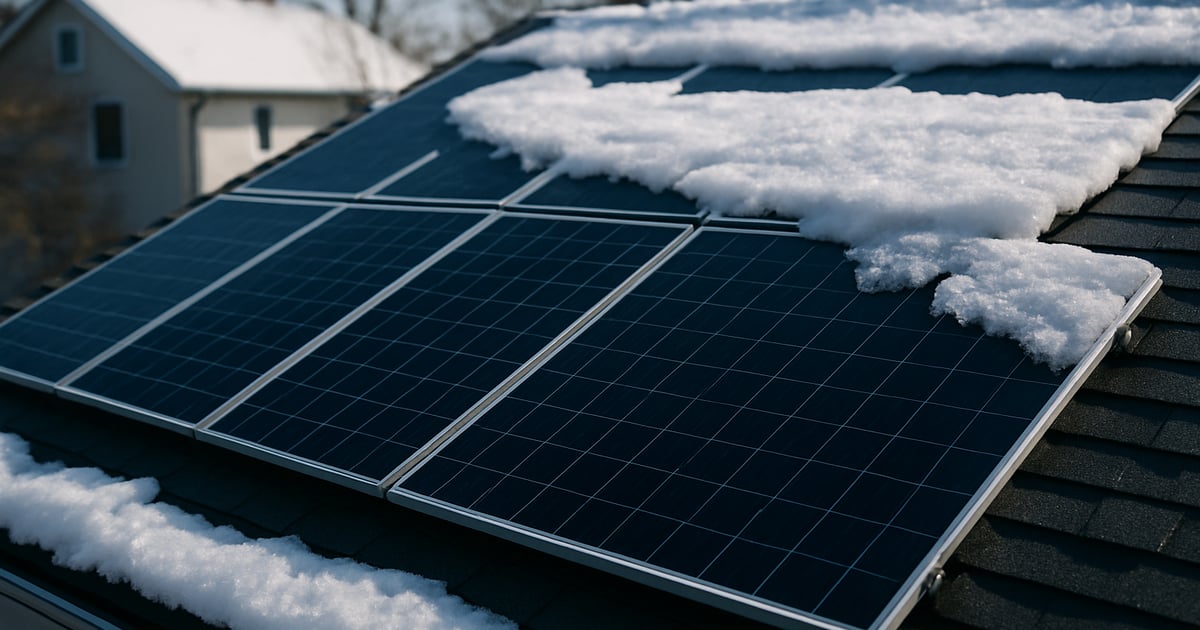
Homeowners in colder states often wonder whether solar makes sense given snowy winters — the short answer is that solar remains a solid option in most northern states, with a few climate-specific factors worth understanding.
Why cold weather isn’t actually a problem for solar panels
Solar panels are rated and tested to perform in a wide range of temperatures, and in fact tend to operate slightly more efficiently in cooler conditions than in extreme heat, since excess heat reduces semiconductor efficiency somewhat. Cold weather itself is not a limiting factor for panel performance.
What actually reduces winter production
- Shorter daylight hours, meaning fewer total hours of potential sun exposure per day
- Lower sun angle, which can reduce the intensity of sunlight hitting panels compared to summer months
- More cloud cover, common in many northern climates during winter months
- Snow cover on the panels themselves, which can temporarily block sunlight until it melts or slides off
These factors are already reflected in the seasonal production patterns that a proper system design accounts for — annual sizing estimates already factor in lower winter output balanced against higher summer output, rather than assuming flat year-round production.
Does snow accumulation actually hurt production much?
Snow can temporarily reduce or stop production while it covers the panels, but several factors typically limit how much this affects your overall annual output:
- Panels are usually installed at an angle that helps snow slide off, especially once the panel surface warms in the sun
- Even a light dusting of snow often melts relatively quickly once direct sun hits the panel, since the dark panel surface absorbs heat
- Heavy, sustained snow cover during a storm is usually a short-term effect within the broader context of annual production, already factored into typical sizing calculations for northern states
Should you manually clear snow off your panels?
Generally, most homeowners are advised against manually clearing snow off panels, primarily because:
- Roof safety risk in winter conditions often outweighs the modest production gain from clearing a bit earlier than natural melting would achieve
- Risk of damaging panels with an improper tool or technique
- Natural melting/sliding usually resolves the issue within a reasonably short window once the sun is out
If you’re concerned about a specific situation — like an unusually heavy, prolonged snow event — consult your installer about whether professional snow removal service makes sense for your specific system and climate, rather than attempting it yourself.
How this affects sizing in snowy states
Installers in colder states with real winter seasons already factor typical seasonal production patterns into system sizing recommendations, so a properly sized system in, say, Massachusetts or New York accounts for lower winter output as part of the annual calculation, not as an afterthought. This is part of why our state guides use annual average sun-hour figures rather than a single peak-summer number.
Bottom line
Cold weather itself doesn’t hurt solar panel performance, and snow-related production loss is a real but generally modest and temporary seasonal effect that proper system sizing already accounts for. Solar remains a legitimate option in northern, snowy states — the math just depends more on your electricity rate and annual sun hours than on winter weather specifically.
Frequently Asked Questions
- Do solar panels actually work better in cold weather?
- In a sense, yes — solar panels typically operate slightly more efficiently in cooler temperatures compared to very hot conditions, since excessive heat somewhat reduces panel efficiency. The bigger factor in winter output isn't temperature, though — it's shorter days and lower sun angles, which reduce total available sunlight.
- Do I need to manually clear snow off my solar panels?
- Usually not. Panels are typically installed at an angle that helps snow slide off naturally, especially once sunlight starts warming the panel surface, and most homeowners find manual clearing unnecessary and potentially risky given roof safety concerns. Heavy, sustained snow cover can reduce production temporarily, but this is usually a short-term seasonal effect.
- Can the weight of snow damage solar panels?
- Solar panels and their mounting systems are generally engineered to handle typical snow loads for the climates they're installed in, similar to how the roof itself is built to code for local snow load requirements. This is part of what a proper structural assessment during installation planning is meant to confirm.