Solar Lease vs Loan vs Cash Purchase: Which Is Right for You?
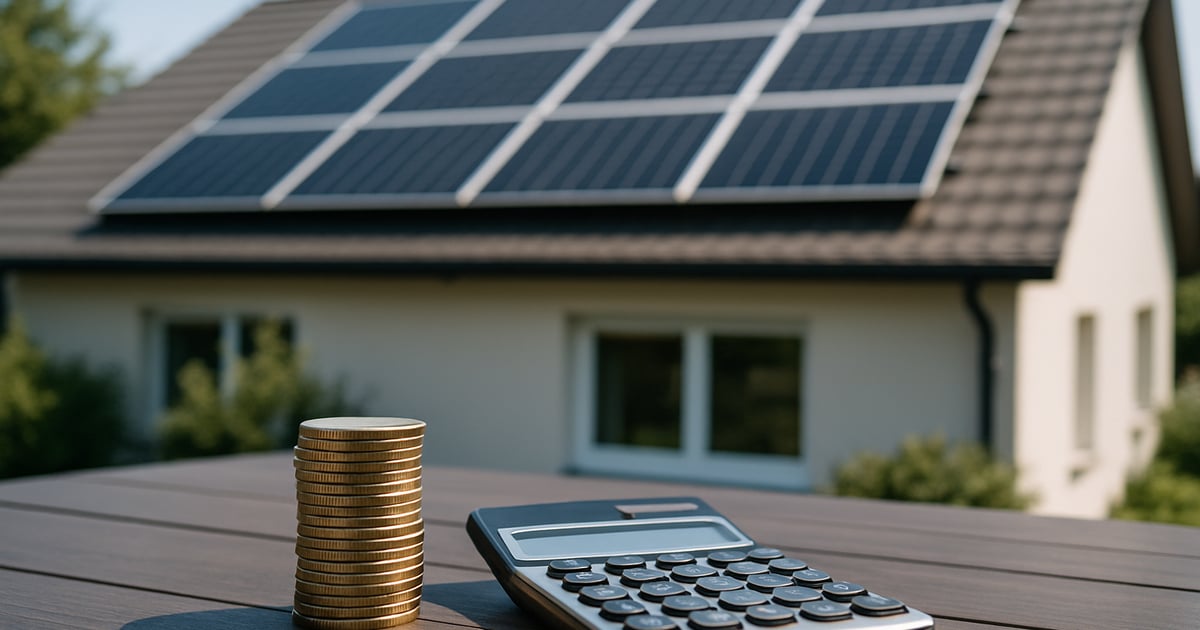
Solar financing generally comes down to three paths: pay cash, take out a loan, or use a lease/PPA. Each has a meaningfully different impact on your savings, ownership, and flexibility.
2026 note: the federal residential tax credit ended December 31, 2025, so no option below earns you a federal credit anymore. What ownership still gets you is every state-level incentive — tax credits, rebates, and SREC income — plus the full long-term savings.
Cash purchase
You pay the full system cost upfront and own the system outright from day one.
Pros:
- Maximizes long-term savings — no interest or lease markup
- You keep every state incentive — state tax credits, rebates, and SREC income
- Simplest to understand, with the fewest ongoing contractual obligations
- Adds straightforward value to your home if you sell
Cons:
- Requires the largest upfront capital
- Ties up funds that might otherwise be invested elsewhere
Solar loan
You borrow to cover the system cost and repay over time, but you own the system just as you would with a cash purchase.
Pros:
- You still own the system and keep all state incentives and production income
- No large upfront payment required
- Many loans are structured so monthly payments are comparable to or less than your prior utility bill
Cons:
- Interest costs reduce your net savings compared to cash
- Total cost over the loan term is higher than the cash price
See our financing options overview for more detail on typical loan structures.
Lease or PPA (power purchase agreement)
A third party owns the system installed on your roof; you pay either a fixed monthly lease payment or a per-kWh rate for the electricity it produces (PPA), typically with no upfront cost.
Pros:
- Little to no upfront cost
- The leasing company typically handles maintenance and monitoring
- Can still reduce your monthly electricity costs compared to your utility rate
Cons:
- You don’t own the system, so state incentives and SREC income go to the leasing company — which may also claim remaining commercial federal credits (Section 48E) that ownership no longer provides
- Total savings are generally lower than ownership over the system’s lifetime
- Can complicate a home sale, since the lease needs to transfer or be paid off
- Payments may include an annual escalator clause that increases the rate over time
Side-by-side comparison
| Factor | Cash | Loan | Lease/PPA |
|---|---|---|---|
| Upfront cost | Highest | None/low | None |
| State incentives & SRECs | You | You | Leasing company |
| Long-term savings | Highest | Moderate | Lowest |
| Ownership | Yes | Yes | No |
| Home sale impact | Straightforward | Straightforward | Can complicate |
Which one fits your situation?
- If you have the cash available and don’t need it for other priorities, a cash purchase generally maximizes your savings.
- If you want ownership benefits without a large upfront payment, a solar loan is often the middle-ground choice most homeowners land on.
- If you want the simplest possible entry with no upfront cost and don’t mind giving up state incentives and some long-term savings, a lease or PPA may fit, though it’s worth reading the contract terms carefully — see our guide on questions to ask before signing.
Run your own numbers with our calculator to see how the math compares for your specific electricity usage and state.
Bottom line
There’s no universally “best” option — it depends on your available capital, how much you value long-term savings versus low upfront cost, and how long you plan to stay in your home. Cash and loan both preserve ownership and your state’s incentives, making them generally the stronger financial choice when available; lease/PPA trades some savings for zero upfront cost and less responsibility.
Frequently Asked Questions
- Which financing option saves the most money overall?
- A cash purchase typically produces the greatest long-term savings, since there's no interest or lease markup and you keep all state incentives and production income yourself — but it requires the largest upfront capital, so the "best" option really depends on your available cash and how you weigh upfront cost against long-term savings. Note that no purchase option carries a federal tax credit anymore; the residential credit ended December 31, 2025.
- Can I switch from a lease to ownership later?
- Some lease and PPA contracts include a buyout option at certain points in the term, but this isn't universal — check your specific contract for whether and when a buyout is possible, and at what cost, before assuming you can convert to ownership later.
- Does financing method affect my home's resale value?
- Owned systems (cash or loan) generally add straightforward home value, since the system transfers with the home as an asset. Leased or PPA systems can complicate a sale, since the buyer typically needs to either take over the remaining payments or you need to pay it off first — worth discussing with a real estate professional if a near-term sale is a possibility.